
Given the various risks to growth, one could argue for rate cuts to be deeper than the 5 per cent terminal repo rate that we are projecting at this stage, says Kaushik Das.

The benefit coming in from the Rs 1.45 lakh crore tax giveaways will also help companies to cut prices by up to 5 per cent to boost consumer demand, which has been sagging and is one of the prime reasons for the deepening slowdown.

Over the next three - six months, UBS believes earnings will be the main driver for EM equities outperformance.

The Centre could further moderate its divestment target for 2024-25 (FY25), as it does not expect large receipts from asset sales - except some ongoing strategic ones, including IDBI Bank, which could spill over into next financial year. Also, it may drastically reduce its FY24 divestment target of Rs 51,000 crore. "We are still evaluating the Budget estimates for FY25. "New big-ticket asset sales are unlikely.
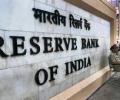
Industry body Confederation of Indian Industry said with the government having announced a clear road map for fiscal consolidation and non-food inflation demonstrating a secular decline, conditions are conducive for RBI to have intervened with a repo and cash reserve ratio reduction.

Rating agency Moody's has described Budget 2007-08 as "largely unremarkable", as it disappointed businesses and the market's hope for meaningful economic reforms.

Gerard Lyons, chief economist and group head of research, Standard Chartered Bank, says that much will depend on monetary and fiscal policies undertaken.

Former Prime Minister Manmohan Singh on Tuesday said the media needs to remain vigilant and flag shortcomings of the government with a view to improve the effectiveness of governance.

A 'White Paper' versus 'Black Paper' battle erupted on Thursday as the Centre and the Congress unveiled documents and crossed swords over the handling of the Indian economy during the nearly 10 years of the BJP-led NDA rule and the previous 10-year tenure of the Congress-led UPA government.
The policy action plan being prepared for the new government does not see the immediate need for a fresh fiscal stimulus package, but recommends a new oil pricing formula and disinvestment of government equity in public sector undertakings in small doses.
Liquidity will be tight and inflation would be about 4.4.5 per cent. In this scenario, the 10-year yield is unlikely to stabilise below 6.25 per cent.

India's economy continues to be robust, but downside risks such as rising crude oil prices, adverse weather conditions, and the global banking crisis outweigh the upside potential in gross domestic product (GDP) growth in the current financial year (FY24), the finance ministry said on Tuesday in its Monthly Economic Review for March. "We reiterate that downside risks to our official forecast of 6.5 per cent for real GDP growth in FY24 dominate upside risks," the review said. "Opec's surprise production cut has seen oil prices rise in April, off their lows of low-seventies per barrel in March.

'India's sizeable foreign exchange reserves should serve as a buffer.'

The current account deficit is the difference between inflow and outflow of foreign exchange.

Lower revenue collection puts upward pressure on government borrowing, ensuring that it deviates from the glided path of debt reduction

The proposed four per cent inflation target is onerous, considering India is currently battling near-double-digit increases in prices.

The International Monetary Fund (IMF) on Tuesday said it is expecting some slowdown in the Indian economy next fiscal year and projected the growth to 6.1 per cent from 6.8 per cent during the current fiscal ending March 31. The IMF on Tuesday released the January update of its World Economic Outlook, according to which the global growth is projected to fall from an estimated 3.4 per cent in 2022 to 2.9 per cent in 2023, then rise to 3.1 per cent in 2024. "Our growth projections actually for India are unchanged from our October Outlook.
The ratings are opinions that reflect the ability and willingness of the rated entity to meet financial obligations.

'The global situation is not very good.'
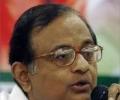
Addressing bankers and economists at Bancon 2013, a flagship event of the Indian Banks' Association, Chidambaram told the lenders to deal firmly with wilful defaulters, but handhold those who are reeling under the impact of the economic slowdown.

It would be a miracle indeed if we grow at 7/8 per cent a year over the current and next few years, says A V Rajwade

Rating agencies Crisil and Icra on Monday revised down their India growth projections for the current fiscal and the second quarter mainly due to the ripple effect of slowdown in global growth and mixed crop output. Crisil downgraded the India growth forecast by 30 bps to 7 per cent while Icra pegged the economic expansion at 6.5 per cent for the second quarter of FY2022-23. "We have revised down our forecast for real gross domestic product growth to 7 per cent for fiscal 2023 from 7.3 per cent, primarily because of the slowdown in global growth that has started to impact our exports and industrial activity.
The Bharatiya Janata Party on Tuesday hit out at the government for the recent hike in petrol prices and alleged that this increase is a result of the UPA regime's wrong economic policies and not an outcome of any current global situation.
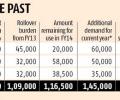
For 2014-15, the bill on this account is likely to be 12.8% more than in 2013-14.

Till such time that a new governance framework comes into being, the progress of reforms in health, education, land, labour, electricity and agriculture could remain fraught with problems, agitations and delays, observes A K Bhattacharya.

Business houses expect rate cut in next RBI policy.

What's different this time is that global financial stress -- which has its genesis in four policy choices made in recent years -- is juxtaposed with a more resilient real economy, observes Sajjid Z Chinoy, chief India economist at J P Morgan.
Bold reform measures to sustain high growth trajectory figure high.

RBI said monetary management in the current fiscal will be dominated by the challenge of moderating inflation and anchoring inflation expectations, while remaining supportive of growth impulses.

The European Commission has unveiled plans for a radical reform of the European Union's economic governance to tackle the underlying causes of the current debt crisis in the euro area.

Retail inflation dipped marginally to 6.44 per cent in February, mainly on account of a slight easing in prices of food and fuel items though it remained above the Reserve Bank's comfort level of 6 per cent for the second month in a row. As per the government data released on Monday, the Consumer Price Index (CPI)-based inflation was at 6.52 per cent in January and 6.07 per cent in February 2022. The retail inflation rate for the food basket worked out to be 5.95 per cent in February, marginally lower than 6 per cent in January.
A possible solution would be to set them up in the barren land or in land with low agricultural productivity.

One could argue that India is not troubled in the same way as China is by a declining population and structural problems in real estate/construction and finance. But India has serious trade and fiscal imbalances, and excessive dependence on capital expenditure by the government, points out T N Ninan.

WPI inflation fell to a 5-year low of 3.74 per cent while the retail inflation was at 7.8 per cent in August.

What is most troubling is that not a single party that is part of INDIA has talked about any kind of reform and economic sense, argues R Jagannathan.

According to DMK, the voters are already consolidated on ideological lines, hence the impact of anti-incumbency, whether against the BJP Centre or the DMK state may not be too much, notes N Sathiya Moorthy.

At present, the NMP states a series of fiscal incentives, including tax sops, will be offered but only to small and medium enterprises.

Echoing the position articulated by Prime Minister Manmohan Singh, China and Russia on Thursday warned that imminent withdrawal of fiscal stimulus by the US could have an adverse impact on the global economy and cautioned the Obama administration against it.
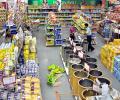
Moody's Investors Service has warned that India, along with the Philippines, Thailand, and Vietnam are highly vulnerable to volatile food and energy prices in the Asia-Pacific region as the Russia-Ukraine conflict continues to disrupt supplies and raise the cost of agricultural products, especially cereals and vegetable oils, as well as fertilizers and other agricultural inputs. This is so because these countries have a higher weighting of energy and food prices in their consumer price index (CPI) baskets, Moody's said in its report released on Tuesday. The weighting of energy and food in overall Indian CPI stands at over 55 per cent.
